

Marketing Tactics For Hard Times
This article examines marketing during economic hardship at the level that matters most: political economy, consumer psychology, pricing, retention, messaging, and market structure. It moves from historical examples, from the Great Depression to the 2008 crisis, into practical lessons for businesses and marketers today. Readers will learn why panic cuts and indiscriminate discounting often backfire, how downturns can open market-share opportunities, what kinds of messages become more persuasive when people feel financially constrained, and how to adapt offer design, attribution, tone, and customer strategy before conditions get worse.

Why Good Efforts Still Fail
Why do good plans still fail, even when the effort is real? This article explores the difference between planning and strategy by moving through systems thinking, feedback, emergence, human psychology, choice architecture, and cybernetics. Along the way, it argues that success depends less on isolated tactics than on understanding structure, interconnection, incentives, audience behavior, and the larger systems our actions operate within.

Situating LLMs for Creatives: Philosophy, Workflows, and Political Economy
A practical, philosophical, and politically grounded guide to how creatives should use AI without surrendering the human parts of creative work. This article explains what large language models really are, why they are not “intelligent” in the human sense, where AI tools help with automation, research, coding, file handling, and analytics, and where they still fail at novelty, judgment, meaning, and strategy. It also explores generative AI through the lens of labor, value, and creative work, arguing that the real threat is less aesthetic than economic. For marketers, editors, designers, producers, and other digital creatives trying to decide whether AI belongs in their workflow, this piece offers a clear answer: let the computer do the computer things, and protect the human work that only humans can do.

The Return of Hybrid Attribution: Ad Conversion Strategies for Unusual Business Models
Learn how hybrid online/offline ad attribution helps businesses track conversions when standard digital tracking alone falls short. This article covers offline attribution, promo codes, call tracking, QR codes, CRM uploads, and creative conversion strategies for podcasts, service businesses, restaurants, real estate, and other unusual business models.

ROAS Explained: How We Got a Campaign to 17x Profit
ROAS measures revenue per dollar spent on ads, but it only works when tracking and conversion values are accurate. Here’s how we used persona research, content testing, and ruthless optimization to move a campaign from 8x to 17x ROAS.

The Marketing “Gimmick” Lives On in Brazil
From Carnaval umbrellas and free beers to Big Brother Brazil’s shameless sponsorships, Casey follows a simple question: why do “marketing gimmicks” feel alive in Brazil but increasingly dead in the US? The answer is not just culture. It is goodwill. This edition connects reciprocity, political economy, and direct response discipline to argue that social media content and “untrackable” generosity still pay off, even when attribution dashboards insist otherwise.
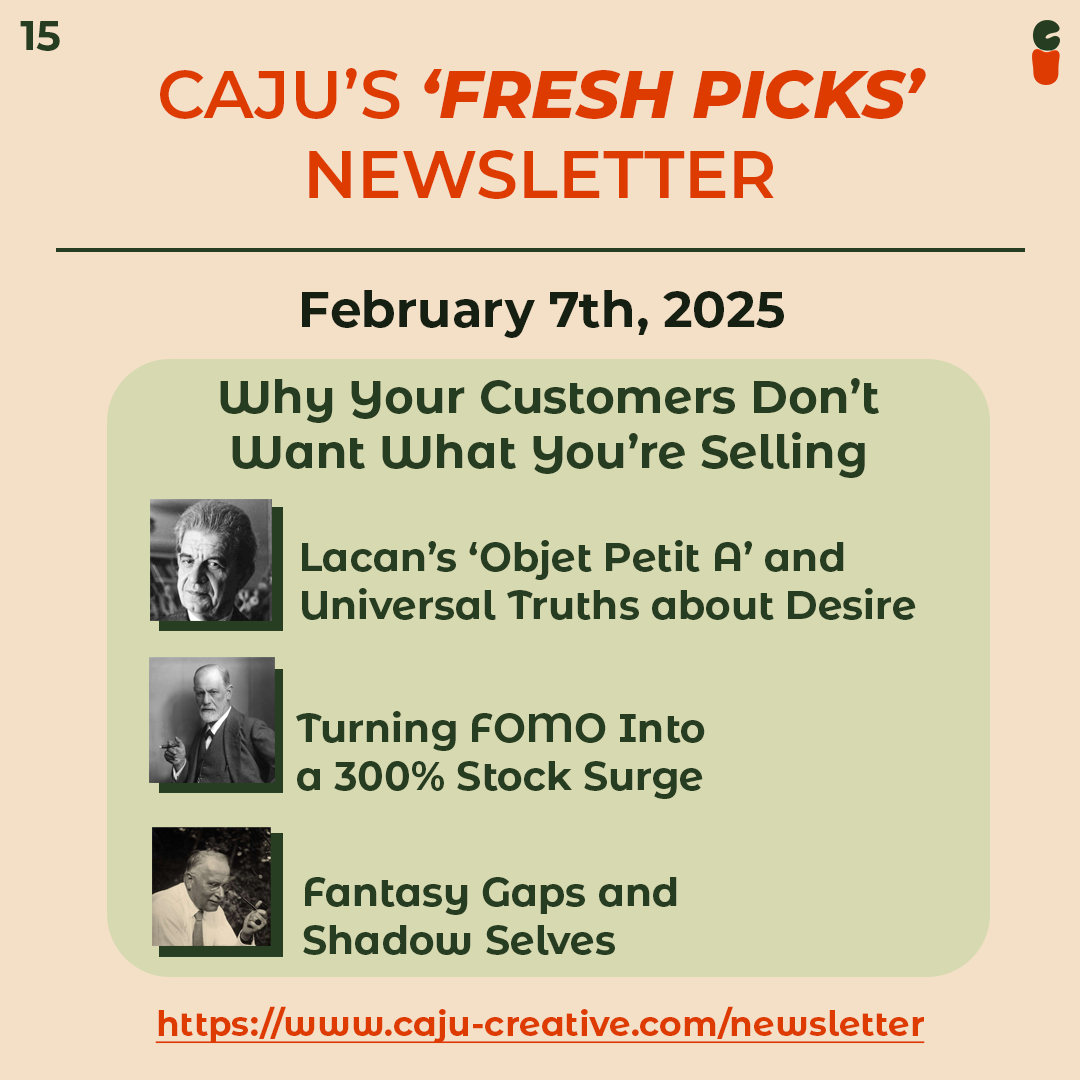
Why Your Customers Don’t Want What You’re Selling (And How to Fix It)
People don’t buy products. They buy permission slips to become a slightly shinier version of themselves.
Marketing isn’t about filling gaps, it’s about widening them.
The best campaigns don’t sell solutions. They sell beautiful, aching questions:
Who could you be?
What are you missing?
How much longer will you settle?
So here’s my challenge to you: Stop trying to satisfy your customers. Start haunting them.
Ethically, of course.

Semiotic Marketing in the New Year
Semiotics is the study of signs and symbols, and how meaning is created within them. In other words, think of every logo, slogan, and ad design being a 'sign' to represent something else. The meaning is not locked inside the sign itself; it comes up from the cultural context in which it would appear. By analyzing cultural codes, you can gauge how different segments of your audience might perceive your choices. What feels whimsical to one group might seem trivial to another. Semiotics ensures your brand speaks authentically to everyone.

How Small Businesses Are Using Algorithms and Statistics to Hack Marketing
You don’t need a tech degree to start using algorithms in your marketing. Affordable tools and platforms like Google Ads or email marketing software often have built-in features to analyze performance and recommend next steps. Begin by identifying a specific marketing challenge and apply these principles step by step. Over time, you’ll see smarter campaigns and stronger results.

Three Examples of Qualitative vs Quantitative Marketing
Any marketer will tell you, all marketing is purely a numbers game. You can either try to increase the quantity of your outreach or the quality. We’ve opted for the latter here. Again, just a small amount of increased theoretical consideration is enough to increase the quality of your output as opposed to paying more money in order to increase quantity. It’s the eternal battle of time vs money.

CAJU Q&A #1
Though tracking conversions across different digital marketing channels can feel like juggling flaming torches, I’ve got some multi-touch attribution techniques that might simplify things. Exploring advanced attribution models like Data-Driven Attribution (DDA) can be a game-changer. They use machine learning algorithms to analyze how each marketing touchpoint contributes to a conversion, giving you a clearer picture of your customer's journey.

The Best Marketing Book I’ve Read in 2024
"However, considerations like these aside, I consider Marketing 5.0 the best marketing book I’ve read in 2024, and one of the best I’ve read on the topic ever. Much of that comes from the fact that it has little to do with the techniques of marketing (there’s a “For Dummies” book for learning those) and more to do with the conditions of modern marketing. Being written in the way-back year of 2021, famed author Philip Kotler lays out a clear-eyed view of the post-pandemic world we seem to forget that we live in."

The Phenomenology of Advertising
Even a pedestrian understanding of Hegelian philosophy gives one immediate access to a higher level of generalistic knowledge. For those working in creative fields and for those who consume the output of creative fields alike, that is an asset that cannot be overstated. Only a more holistic philosophical framework for weighing the deluge of ideology hefted at us every minute of every day can break one from the confines of the common view which sees every thing, idea, and person we encounter as fully formed, static, and rigidly defined as opposed to a momentary and blurry capture of a greater, continuous process.

What Google’s Insistence on AI Means for Your SEO
Rather than praying to the SEO gods that Google will deem your site worthy of appearing higher in the search results, and making your site content sound robotic in the process, one might bypass that strategy altogether and put your content directly where your audience is. A strategic content campaign that delivers useful and entertaining content to online viewers where they’re at does something for them and endears them to your company before they’ve even seen your site.
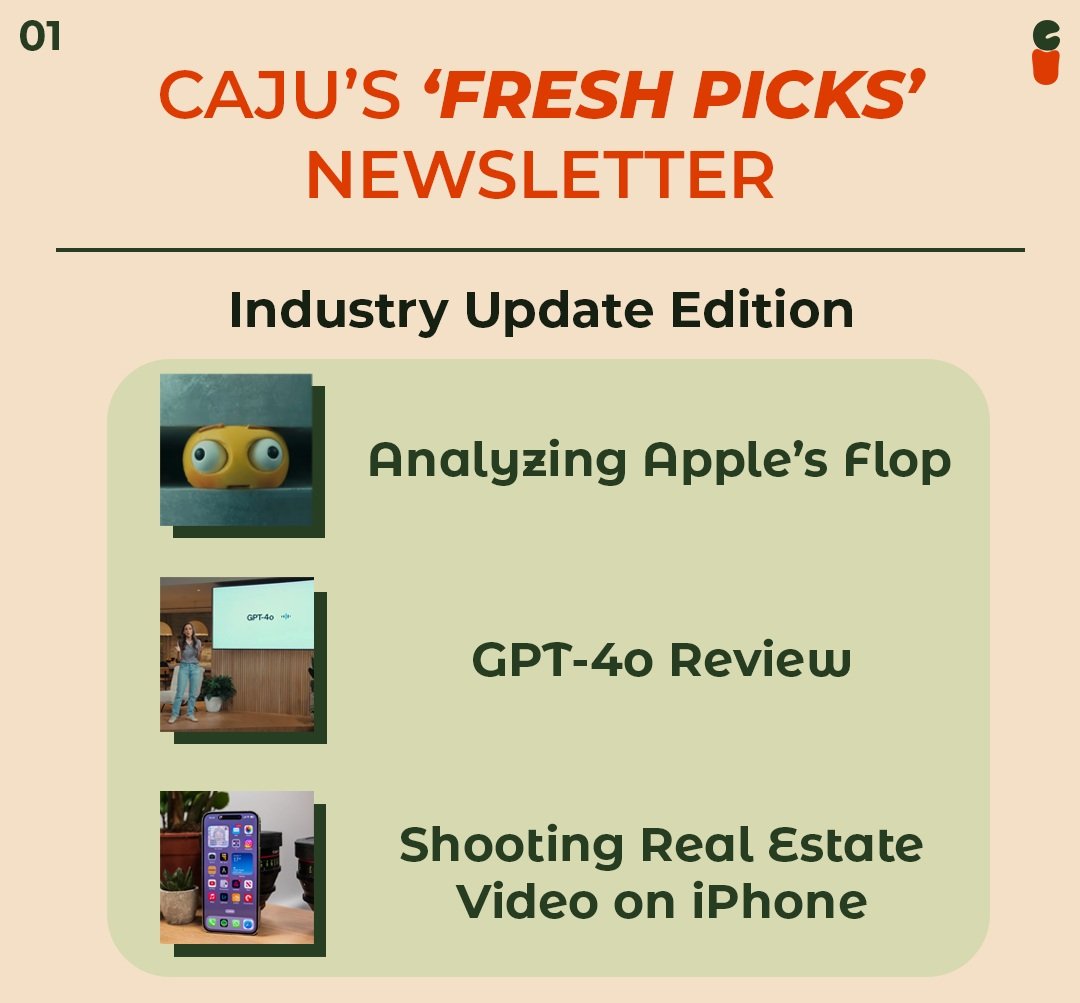
FIXING APPLE’S FLOP, GPT-4O REVIEW, IPHONE VIDEOGRAPHY TIPS
If I were really trying to sell a computational device to artists, I wouldn’t be headlining its thinness. My 2018 iPad Pro is plenty thin and I have no ambitions to replace it anytime soon. If I wanted to advertise iPads to artists, I would want to show how they make you better at using the creative objects you love. You + iPad = More of what you love, not less. You could write around the “less is more” cliche, but what might be better is showing the artistic process of trying and failing over and over again.