
Situating LLMs for Creatives: Philosophy, Workflows, and Political Economy
What LLMs Do Well, What They Still Can’t Do, and Why The Difference Matters
Previously titled: “How Creatives Should Really Use ‘AI’”
A blog on this topic is overdue largely because I’ve been dreading the idea of covering it.
Generative AI, LLMs, and their outputs are extremely contentious right now, especially in creative circles. Up until now, the cost/benefit of sharing my thoughts on the subject kept me quiet as I weighed any novel points I might make against pissing off either of the topic’s two highly vocal camps.
What’s changed enough to warrant an article now is that, after slowly trying to work large language models into my creative workflow, I’ve become very confident in my ability to explain first-hand what they’re exceptionally good at and what they’re absolutely abysmal at.
That is the focus of today’s edition: I’m going to give an overview of how I think creatives can reasonably use LLM technology, where generative AI belongs, if at all, in a creative workflow, and caution against common uses that I believe hurt more than they help.
My quick bona fides:
To any angry creatives reading this, I have worked in production for roughly a decade, more if you count shooting and editing videos in high school. I have been a lowly PA, I’ve been the manager of a digital team, I’ve been the senior executive producer for a creative department, and I’ve had numerous personal projects, dabbling in everything from jazz to fingerpainting. I’m also no department chair, but I am better read on the philosophy of mind and political economy than your average CMO, and I would stake my life on that. So don’t come for my credentials.
To anyone else who might doubt my ability to speak knowledgeably on the subject of large language models, know that I studied in the Social Technologies MA program at ASU, have worked for several years as a freelance data analyst, and am currently about 90% of the way to earning a BS in Computer Science for the express purpose of getting you to stop typing whatever message you may have started before this paragraph began. So don’t come for my credentials.
With that out of the way, let’s get into it.
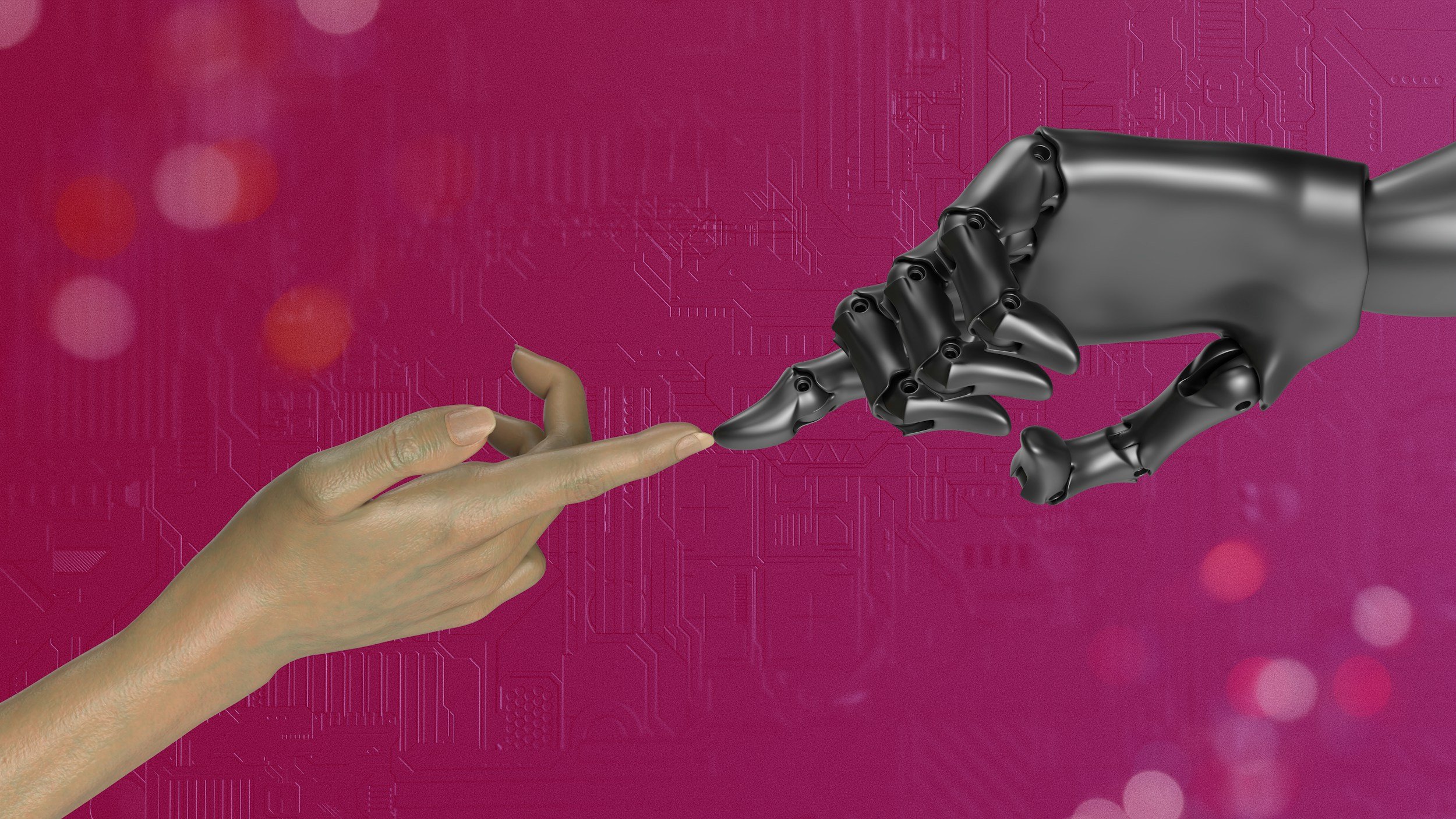
Why “AI” Is Not AI
One thing that I often find troubling about this topic is that the loudest voices often tend to be the worst-informed on how the technology operates. What I’d like to do before going further is get us on a solid footing by outlining, in plain terms, what LLMs are doing under the hood, because to the untrained eye, it can appear as magic. If one assumes this technology to be magic, then one’s critiques of the technology also become magical, i.e., fantasmatic.
Those who are content to assume this technology is a kind of magic, for lack of a better word, shouldn’t be fully blamed for believing so. The marketing campaigns for these technologies alone represent a multi-billion-dollar industry. While there is reason to say that the GPT methods that underlie modern large language models do represent a significant qualitative leap in computing sophistication, it is impossible to separate them from the broader genus of machine learning models, and we would be wise to keep that in mind.
To disillusion you as plainly and quickly as possible, then, I find that it is useful to think of LLM technology as a highly sophisticated next-word predictor. Words are broken down into subword units or fragments called “tokens.” Modern GPT-style systems are trained first to predict the next token in a sequence, then post-trained with additional feedback and alignment methods so their outputs are more consistent, safe, and legible to humans.
ChatGPT is not a computer “talking” to you in the human sense. It is a server calculating the solution to a math equation where x is your input and y is its response. Said “equation” is a given model. As in algebra, the “correct” solutions to this equation exist in a range. As the equation is refined, that range narrows.
This tweaking to gain incremental improvements towards more accurate and reliable predictions is the core tenet of machine learning. Though it may sound foreign, it is much closer to you than you may think.
When you use the magnetic lasso tool in Photoshop, and the software “decides” where to place your selection markers as you drag it along a photo, that is machine learning. When you click the auto-adjust button in your phone’s photo library, and it adjusts the brightness and contrast of your photo, that’s machine learning. When you go on your favorite website and search for artistic inspiration, you are at the whim of machine learning. When you build your website to be SEO-friendly, you are optimizing it for someone else’s machine learning models.
I think most people are vaguely aware that their Netflix recommendations or the Instagram ads that seem to know what they want before they want it are based on machine learning. What people might not know is that your phone uses machine learning to extend your battery’s life by only charging to 100% when it thinks you need it, by suggesting apps to open based on the time and your location, and, of course, to suggest the word you actually meant to type there is “duck.”
Machine learning is in your car, in missiles, in children’s toys. It’s what tells you there’s a different route that’s 3 minutes faster. It’s what enables a bot to headshot you from across the entire map. It can group your customers into segments. It can tell you if there’s going to be a drought this summer.
Machine learning is everywhere, and most people don’t even know it’s there. It’s so ubiquitous that even if you, for some reason, had a problem with it, there’d be little short of moving to Antarctica you could do to escape it. Though I think they’ve got some research stations there too…
I think about this aspect of machine learning a lot. Some people’s entire lives are shaped by it, and they don’t even know the first thing about it.
Google recently announced the addition of an “Ask Maps” feature to Google Maps, and I expect it will be widely panned by LLM critics despite the fact that the technology it's built on does not represent a significant departure from the machine learning algorithms that determine optimal routes in Google Maps to begin with.
When a generative model produces a sentence or an image, it is, in every basic sense, performing a kind of machine learning. Some systems are autoregressive, some are diffusion-based, some newer multimodal systems blur that line, but no matter the specific method, these systems take digital inputs, pass them through learned statistical structures, and return digital outputs. No matter the form the tokens take, the relations among them are being optimized.
The digital artist works in a similar capacity, refining pixel patterns, optimizing for a certain output, learning and improving as they go. The crucial difference is that the digital artist is driven by what might be called “passion” as likely as it might be called desperation, but whatever it is called, it cannot be called algorithmic.
This is why I put “AI” in quotation marks. An algorithm is not intelligent in the same sense that a human is. In the same way that a parrot and a pop star can both sing, you would never call a bird a singer. One is a complex phenomenon, the other is a much simpler imitation. Human intelligence is notoriously hard to quantify (IQ is less than worthless, and I will die on this hill), so yes, a program is artificial, but calling it a rendition of intelligence, as we ordinarily understand it, is a stretch.
But I digress.
So, LLM technology is not magic nor inherently malicious, just as much as it isn’t “intelligent” or inherently useless. It is simply a non-trivial advancement in computer prediction. Still, if you are an anti-AI creative, I would suggest you be careful and rigorous with your critiques of LLM technology. Indeed, there are valid critiques to be made. However, if you damn the technology wholesale, you’re likely damning significant portions of the technology you yourself have benefited from in your career.
What AI (Still) Can’t Do
Off the bat, I have to say RIP to Hubert Dreyfus, one of the greatest philosophers of technology to ever live. The title of this section is a play on the title of his magnum opus, What Computers Still Can’t Do, published in 1992 and itself building on his earlier What Computers Can’t Do from 1972, a book that anyone even passively interested in technology should read.
Now, I believe LLM technology exists on one side of an event horizon in human creativity that it has no possible way of crossing. Since these models are mathematical systems rather than magic, there are dimensions of human mindedness they do not share in their current structure. This is not a new observation either; it belongs to a long line of critiques levied against symbolic and computational accounts of mind since the early decades of AI.
Sans the philosophical jargon, my position is that machine learning models do not generate novelty in a way that applies to most creative practice. They can recombine, extrapolate, and interpolate, and they can do it all quite impressively. But when a human mind creates something, it does more than combine previously encountered forms into a new average.
I despise the computational theory of mind, but to put this in computer terms, the human mind exists entirely in a world of qualitative, ultra-unstructured data. Not even in the sense like a faulty sensor might give noisy data, because even this would be “structured” in the sense that if you’re seeing the amplitude of a sensor reading, noise or not, then that data is structured enough for the computer to parse it quantitatively.
No, the human mind takes as its input “qualia,” a word from the philosophy of mind used to describe the datum of qualitative sense experience. To better illustrate, I’d like you to imagine for a moment how you would describe the color red to an alien lifeform that had no idea what that was. If you were scientifically minded, you might describe red as a range of frequencies in the visible light spectrum. However, the “red” that you see in your mind is not a frequency; it is a sensation, a memory, a feeling. A poet might have better luck explaining red to an alien. No amount of sensor readings or scientific observations can tell you what it is like to experience “red” as a conscious being in the world. That indescribable essence of human experience is qualia, the brush all art paints with; wholly invisible to a computer.
Qualia are precisely the input that the human mind is able to parse and synthesize into the incredible range of linguistics, semiotics, artistry, mathematics, and so on that make up the whole of conscious human experience. Even when performing a quantitative action like arithmetic, it feels like something to be a human doing arithmetic. This is precisely what LLMs lack. They can attempt to reverse engineer and mimic the way humans describe the experience of “red” online, but they will never know the qualia of red. A photo of the color red, to an LLM, is simply the hex values, the pixel locations and dimensions, and a series of related tokens it uses to indicate a good output given these inputs would be “Red.”
The philosopher of mind Thomas Nagel, in his What Is It Like to Be a Bat? (1974) theorizes that what it means to be a conscious being is to be the kind of thing about which it can be assumed that it is like something to be that thing. The question “What is it like to be a computer?” or “What is it like to be ChatGPT?” is like asking “What is it like to be a rock?” or “What is it like to be a math equation?” It’s a category error; the question is being asked of something it couldn’t possibly apply to.
Therefore, I believe, creative tasks will, on average, be performed better when directed primarily by a human mind. I take this as an axiom. My suspicion is, despite what “the market” may say at any given time, the majority of people will feel a sudden and profound drop in the perceived value of a given piece of digital art the moment they discover it was primarily the output of a mathematical formula rather than a human mind, even if a human mind directed that formula.
There are economic reasons and implications for this, but I’ll save those for a later section.
If you’re a professional creative early in your career, here’s a thought that might serve you well: A computer is much better than you at drawing straight lines, and that is exactly what makes your creative endeavors more interesting.
When you sit down to brainstorm ideas, even by yourself, your mind is awash in experiences that you’re recalling and goals that you are tailoring those ideas toward. There is a thought or feeling you’d like to convey, and you are delving into the qualitative realm of semiotics when you think of the best ways to represent those thoughts and feelings symbolically. This process is so different and more complex than what a computer does to complete the same task that I grimace even mentioning the two things in the same sentence together.
A computer fundamentally cannot bring the “new” into reality the same way the human mind is able to. For a computer, even randomness is deterministic, bounded by a system of rules. The human mind, by contrast, is almost entirely indeterministic (though the task of tracing actions to their origins is harder from the inside than the outside of a brain). When you have an idea, you, yourself, usually cannot trace its origins. Even with careful meditation or years of therapy, the origins of the thoughts, feelings, and neuroses that seem embedded in your very nature remain just out of analytical reach.
This is the true human superpower, even if it is often portrayed as a weakness.
It is the headstrong Captain Kirk, trusting “his gut,” who is able to foresee the correct course of action, though it eludes the calculative and logical Spock. Human intuition is the bodily manifestation of the materially determined and unconsciously structured memories of all you’ve seen and experienced, even if you cannot recall those experiences consciously. For a computer, there is no intuition, there is no unconscious mind (or a conscious one for that matter), there are only inputs, outputs, and the algorithms in between. The closest thing to an unconscious mind that a computer may have is the “black box” of an unsupervised learning model, too complex for a human to grasp.
An imperfect drawing, rendered by a human, is a near infinite source of artistic speculation. A “perfect” drawing, rendered by a computer, is a source of artistic speculation only via the attributes that were directed by a human mind, for example, the input prompt or the mathematical procedure it is built on, or via the impacts it may have on a human mind or the human labor that went into building it. It is only within the context of the human symbolic order that a computer has any meaning at all.
When you ask a computer for suggestions or ideas for a given artistic endeavor, it pulls, probabilistically, from the data and structures it was trained on. The answers it gives you, absent additional information, will tend toward a statistical average of the inputs it is working with.
You, as a human, have a much wider field of vision than the computer because you exist in both the qualitative and quantitative worlds, whereas the computer exists only in the quantitative one. You, as a social being in the world, also have a much longer field of view when it comes to trends and patterns, due in no small part to your ability to pull from real-world conversations rather than only what has been written down online.
As any data analyst worth their salt will tell you, you cannot let the data speak for itself; it will lie. The hermeneutics of statistics runs through, roughly, the following cycle: collection mechanism design, collection, observation, interpretation, calculation, interpretation, rendition, interpretation. That is to say that the numbers are never just numbers. The numbers are simplified, symbolic representations of attributes of the real world. They have to be uncompressed by the person who is interpreting what the numbers mean, and abstracted yet again if those interpretations are visualized.
For example, if I say the forecast says 20% precipitation today, what does that mean to you? What does a 20% chance feel like? Does it feel different than a 50% chance? How am I meant to feel about this information? Does the information itself tell me how I should act on it? Should I take 20% of an umbrella?
The numbers do not actually contain qualitative information in themselves. It is only through human interpretation that they are given meaning. Even something as simple as 2 + 2 = 4 takes on new complexities when it is applied to real observations within the world. What exact mechanism prevents each 2 from being 1? Is this the same mechanism that prevents the combining of two 2s resulting in a single 2? If each 2 is a collection of 1s, what do the 1s consist of? etc.
It is because of this that you should not take an LLM’s creative suggestions at face value. More often than not, they will be the average opinion of what hundreds of thousands of internet users would consider “creative,” and that is, unless you are the CEO of Reddit, not likely your target audience.
In my estimation, then, a human has three main advantages over a large language model: novel creativity, identifying macro-patterns, and making prescriptive strategies.
Understand these. Internalize them. Understand how these facets contribute to what you do. Then never let a computer do these things for you.
If you need a wall to throw ideas against and see what sticks, an LLM can help you with this, but it is imperative that you not stop there. Apply your own perspective and taste, further improve on the ideas, and you’ll increase the perceived value they have for a human interpreter. If you’re asking an LLM to give you trends or predictions based on data, understand that its predictions will never fall outside the range of the input data. It can never account for what it does not see. Only you can do that. Only you can see the ways in which those patterns connect and overlap outside of the present data: the “macro-patterns.”
Finally, after you’ve polished your idea or identified a macro-pattern, and you’re asking yourself, “What does this mean for the future?”, that is still a task better left primarily to you. You live in the world. The computer does not. Human decisions and actions impact your subjective life, something the computer does not possess and cannot possibly understand.
That is the primary takeaway from this section, if not this whole article: If you are working with computational systems, you need to diligently and deliberately insist upon your humanity when interpreting and acting upon their outputs.
What AI (Still) Can Do Pretty Damn Well
Now, to give the silicon-based devil his due, with few exceptions, computers are better than humans at algorithmic tasks. Without getting into the weeds of computer science, if a task has very explicit instructions for how it should be completed, a computer is extraordinarily fast, faster than most would expect, at completing it.
For example, on the device you’re reading this on, every second, the computer makes a series of passes across every pixel on the screen to check if its RGB value or brightness needs to be updated. This pass happens 30 times per second on ancient computers and upwards of 60 times per second on more modern computers. Though even 60Hz for a computer is mind-numbingly slow.
Every window of every application you use loops back upon itself as fast as your processor will allow, upwards of thousands of times per second, checking to see if there are any pieces of the program that need to be calculated or updated. This is done in addition to the tens of thousands of additional calculations happening simultaneously under the hood at any given moment.
Here’s an experiment I just did. I wrote a Python script that asks the computer to count to 20,000,000, and for each number on the way, it should square said number, divide that number by 123, add the remainder of that division to a total, and return the total when it’s done. On my M4 MacBook Pro, the operation took 1.274 seconds. On my iPhone 16 Pro, it still only took 1.45 seconds. That’s 20 million calculations, not just number counting, in less time than it takes to finish reading this sentence, and Python is an exceptionally slow programming language.
How is such a thing possible? In a single sentence: Very smart people have been working for a very long time to make problem-solving machines very fast.
A “programmatic” task is any task that can be broken down into algorithmic steps. With only a few kinds of “gates,” or physical devices that control the flow of electricity through them, a machine can be made “Turing-complete,” meaning it can perform any calculation given sufficient time and correct instructions. As long as real-world objects and methods can be abstracted to symbols, those symbols can be programmatically manipulated.
Okay, but why does all that matter?
Good question, me.
It matters because that means any task that you can break down into a set of simple instructions can be solved, exceedingly fast, by a computer. With new LLM and coding-agent technology, natural human language can be translated 1:1 into executable machine code.
Functionally, there is no longer a gap between what you can say and what you can instruct a computer to do.
For example, as a budding analyst, I learned Python to parse, analyze, and model data. Could I have done this by hand? In most cases, yes, that’s what statistics was originally invented to do, but it would take me, in some instances, years to accomplish what the computer could in only a few seconds (faster if I had used a compiled language like C++). The real time sink for getting a computer to do what you want has always been getting the instructions and the syntax right. The execution is the easy part! Even after thinking through what you want the computer to do, breaking it down step by step, and anticipating every potential bug, if you don’t use the right grammar–say you use a comma where the computer expects a semicolon–your program will not run.
The ability to translate something as qualitative as an English sentence into executable computer code represents an advancement in technology that cannot be overstated.
If you’re a creative and you’ve made it this far, you’re probably curious, but there might still be a voice in your head telling you that this section doesn’t really apply to you. In my experience, this is likely because you view the computer as a tool only to be used by coders to its fullest potential. If you’re like I was, you’re content to use the software that other people make for you.
I’m here to tell you that this mindset is akin to renting a hammer to facilitate your daily tasks, working on a hammer-making machine.
Obviously, there will be exceptions (if you’re going to try to make your own Photoshop, best of luck to you. Let me know if you have any success, and I’ll be your first customer), but there are probably things in your work that taking an algorithmic approach to would unlock more of your time and creativity; not to mention save you money on software subscriptions.
To give you some idea of the possibilities, if any part of your job so much as touches metrics, congratulations, you’re now a junior analyst. Don’t leave all the fun to the sales department. Every social platform allows you to download Excel or CSV files containing every kind of metric you can think of. Even if they don’t let you download the data cleanly, you can select all, copy, and paste entire webpages into an LLM, simply say “Clean this up,” and it will give you an Excel file or CSV! This is one of the places where “AI” use for creatives has the potential to eliminate hours of tedious work or unlock brand new skillsets.
What might’ve taken me an entire afternoon to clean, load, and transform, let alone perform the actual exploratory data analysis part, 4 years ago, now takes me roughly 60 seconds. I copy and paste the rendered (not the raw) HTML from a webpage and simply say, “Structure this, calculate z-scores to find outliers, and run a correlation analysis.” Then, I let the computer do computer things like math, allowing me to do human things like editing.
If you’re a digital creative, let me insist that this does in fact apply to you.
If you’re working on a computer, then you’re working with files. Working with files comes with all sorts of headaches when it comes to transferring, formatting, naming conventions, digital workspace organization, and so on. This is a perfect entry point for automation. Any task that you find yourself doing on a regular basis can be automated. Once you get into that mindset, you unlock a whole new world of productivity ideas. LLMs can help you put those ideas into practice, though I would suggest going slow at first. Find yourself manually converting or resizing files? You can make a script that automatically reformats any file dropped in a folder; your only limitation is your ability to describe what you want. Want that folder to also upload to your Google Drive? There’s an API for that; all you have to do is ask for the setup steps.
If you’re a creative, you probably do a lot of Googling. The ability for LLMs to search the web and summarize results can be extremely effective if you understand exactly how they do so. LLMs are exceptionally good at summarizing large amounts of text in an intelligible way. Will the summary be sufficient to make you an expert on the given topic? No, but you rarely need to be for day-to-day tasks, and besides, that’s not the point of a summary anyway. A subject that would take me 30 minutes to adequately Google, sort through the results, and read until I understand now takes me less than a minute.
In my career, I’ve produced content for a variety of industries that I didn’t have the slightest idea about. Medical equipment sales, children’s health non-profits, online sports betting, my only entry point to that world was what information I could get from my clients and what I could Google. With LLMs, there is no subject that I can’t immediately receive enough information to sufficiently discuss, even with an actual expert.
Notice how what I’m doing is not asking the LLM how to speak to the experts. I’m asking for help educating myself. That’s a crucial bit, I think a lot of people get wrong.
If you are researching complex protein chain folds for your work as a biochemist, I wouldn’t leave the research entirely up to the LLM. However, if you’re a simple marketer like me and you want to know the latest goings-on in the world of rubber baby buggy bumpers, all you need to do is ask, and the LLM can perform your Google search 50 different ways and summarize the results in the same time it would take you to even find the right Wikipedia article.
I could go on like this, but you get the picture. Keep an eye out for anything you find yourself doing over and over again. Always writing the same report? Always applying the same color correction or watermark? Always uploading or downloading files from the same place?
The newest and greatest computer coding language is whatever language you speak. If you’re a digital creative, you do the majority of your work on a TASK-COMPLETION DEVICE, you should let it complete some tasks for you. All you have to do is ask.
The more you let the computer be a computer, the more time you’ll have to be a human. Of course, this also depends on you barring the computer from doing human things.
Slop or Not? The Political Economy of “AI”
Now, the elephant in the room: generative AI audiovisual outputs.
I will keep this section brief and bombastic.
Much of what generative AI produces today is derided as slop, and in most cases, that is a fair assessment. However, I have found that those who use this term often betray a lack of understanding of the technology they’re currently criticizing. Often, these critiques come across as hypocritical because more likely than not, said critics are already unknowingly benefiting from this technology in one form or another.
I’ve gone to great lengths to try to understand the knee-jerk hatred that creatives show towards LLMs. Here’s my approximation so far.
As outlined previously, much of the functionality of digital creative tools relies on one form of machine learning or another. So I don’t suspect that’s where the real revulsion comes from.
Some critics locate the problem in the training process itself, for example, in the unauthorized scraping of online copyrighted material to train generative systems. That is a more serious critique, one with some actual economic and legal weight, but it is odd to hear parts of the digital artisan class arguing for stronger regimes of intellectual enclosure and gatekeeping, as though creativity ever develops in a vacuum.
I come from the era of torrents and file sharing and information wanting to be free. Almost every piece of software I learned my skillsets on, almost every song or movie I loved as a teenager that inspired my career, I stole, plain and simple. I paid those artists and businesses back eventually when I had an income, but I never forgot my roots, and I refuse to become a champion of intellectual property in the abstract, knowing what I do about how ideas are borrowed, metabolized, and improved upon by artists and scientists alike.
There is also the much deeper philosophical issue of what constitutes art in the first place. Forgive me, but I don’t think the average graphic designer has cracked this one yet. Can a piece of art created by a human ever be “slop?” As I mentioned before, do the algorithms that enable LLM technology constitute art? Can a mathematical equation be art? Can one produce art?
Furthermore, if a modern creative is someone who produces digital commodities with their labor (often in an assembly-line fashion), to be quickly consumed and forgotten on social media, does what they produce automatically constitute art? Does branded content exist on the same artistic level as, say, the Mona Lisa? I know this is probably the harshest thing I’ve ever said in one of these articles, but I know firsthand the soul-crushing feeling of conceiving what you think is a genuinely good and artistic idea, only to have that idea shaved down and focus-grouped, kiddy-proofed and confirmed to “brand guidelines,” until it begins to resemble slop, even to you.
I’m not saying that Gen-AI-produced videos or images look particularly good. I’m just saying there is more nuance here than the discourse often allows for. Like, what if I design an animation in After Effects 99% by hand, but I use Gen-AI to make the background? Does the entire animation become slop? What if I design 100% of the animation, but I use an LLM to help me write the code for the motion easing? Does the entire thing become slop then, or just the way it moves? What if I train my own model on my own designs? Does the way the algorithm ingests my creations make them slop? What if I train that same model strictly on public domain media?
Many creatives are upset that LLM companies scraped their art from the internet to use in the training of their models, but seemingly had no problem giving that same art to the online platforms for free in the first place. I know people don’t read ToS fine print, but come on, I thought we all understood that when you upload something to Instagram or say something on Reddit, that’s you making their product for them and giving it to them for free.
That’s not even to mention that the LLM model doesn’t really contain anything. It only has the remnants and token relations of the things it was trained on. It’s like if a thief broke into a bookstore and taught every piece of knowledge inside every book to a child they brought with them, then left. Yes, the thief did break and enter, but nothing was actually stolen. By the logic used by many anti-AI creatives, what the police should do in this situation is confiscate the knowledge inside the child’s brain.
My point here is that the disdain creatives feel toward AI is better framed as an economic critique than an aesthetic one. For instance, when a small business industrializes and lays off its staff because its output increases and it has less need for labor, people get rightly upset, but nobody calls the people who operate the factory equipment “slop-engineers.”
The biggest danger of LLM technology is that it is increasing the output rate and decreasing the socially necessary labor time for what has traditionally been an artisanal craft. Digital creatives are falling prey to industrialization in a way that should feel familiar to anyone who has paid attention to the history of labor. It is painful and upsetting, and rightfully so, but it is also part of a story that has been playing out since the invention of the Spinning Jenny.
History gives us very few reasons to believe that a widely adopted, labor-saving technology, once economically viable, will be abandoned en masse simply because it is disruptive. I would not bet on generative AI being the exception.
“Computer” used to be a job, not a device. The invention of the computer did put many “computers” out of work, but many also adapted. The difference was that the “computers” who landed on their feet were the ones who endeavored to master the new technology, leveraging their existing knowledge to perform the job better than a layperson using the same device could.
Yes, with generative AI, many non-creatives will try to compete for jobs traditionally reserved for creatives. But give a creative and a non-creative the same tools, and the person with creative work experience is still going to do a better job. Because the human mind excels at synthesizing sparse qualia, conveying feelings through narrative, and looking at how its work fits into the broader picture. No tool can improve those soft skills, but the right tool, when embraced, can make those soft skills much more efficient and their performer more productive.
You are a person; you should use tools, not be one.
Agentic Workflows for Creatives
You’ve had your vegetables, now, dessert.
The talk of the town recently has been “the death of SaaS,” or software as a service; basically, any company that requires you to pay a subscription to use a piece of software on your computer. Over the past couple of decades, this has grown into a colossal industry responsible for building many of the towering skyscrapers in the largest city nearest to you!
When I first read the claim that the newest generation of LLM agents was ushering in SaaS’s demise, I remembered the size of some of those buildings, and it gave me pause. However, after spending time with newer agentic tools and after finally getting the hang of OpenAI’s Codex, I agree. Not only do I think SaaS is going the way of the Dodo, but I’m ready to don the executioner’s hood.
The impetus for this particular article, even though I’d been deliberately putting off writing on this subject for years, was the sudden realization that most of the software I pay to run on my computer no longer runs primarily on my computer. Most modern software exists primarily on somebody else’s computer, usually the computer of the person you’re paying a subscription to, and what you rent is an access portal, not the program itself.
Call me old-fashioned, but if I pay for something, I want to own it. If I’m paying a regular subscription, it should be in exchange for a regular delivery, not to continue using something I already paid for.
If I pay for a piece of software, I want to own that software, and I want to run it on the computer in my house, not the one in yours. I have yet to forgive Adobe for the Creative Cloud.
Spurred on by this growing rage, these past few weeks, I decided that, whenever I could, I would give these new AI agents an earnest try. If nothing came of it, no problem. But if I could eliminate even a single subscription, victory.
After a small learning curve, I’m confident saying this is likely going to change how I do my job for as long as these tools remain available.
My mental calculus was this: If the time it takes me to instruct the agent to perform a task, plus any necessary follow-ups or corrections, takes less than the time it would take me to do the task myself, then that’s a win.
My experimenting started small. I had a collection of files, and I needed to change the names to something complex that the regular rename UI on Mac wouldn’t do. That went great, so I gave it something a little more complicated: a batch of video files, one of which I suspected was corrupted but didn’t know which. Sure enough, it found one that was wonky, and it did it while I focused on other things.
I moved on to things more personal: organizing this or that project folder. Then, more personal: organize my desktop. It did it, very few instructions needed.
Then my mind began to wrap itself around the tools a little better. Anything I could explain with words, this thing could do.
I began to think of time-consuming and monotonous tasks I have to do regularly.
One is to consolidate agreed-upon work scopes from introductory meetings into an official SoW. I already had meeting notes, so really all I needed to do was transfer them into the correct format. I created a directory for one particular prospect, created a subfolder for reference docuemnts, and another for my meeting notes. I simply pointed the agent at the directory, explained the task, the resources, and the expected output, and it went to work.
The output was great, and I realized an unexpected benefit. As the scope of the project changed and I needed to adjust the SoW, I wouldn’t even need to write out all the new changes to the agent. I just needed to put the latest meeting notes in the correct folder and tell the agent to update the SoW according to those notes. “Amend the SoW according to the latest meeting notes.” Done. No mistakes made.
I then discovered that Codex comes with “Skills,” which are essentially reusable tool-like capabilities it can call on to work in tandem with other software. There is even an option to add new skills, meaning that if the agent couldn’t do something, all I needed to do was tell it to give itself that new functionality, and it would build it.
Now my mind was really racing.
I connected the agent to an advertising platform API and enabled it to non-destructively pull the latest ad metrics on a regular basis. Now, when I sit down to write my weekly reports for my clients, the latest metrics are waiting for me. Not only that, but by providing it access to my archive of past ad performance, if I want to know how recent performance stacks up with past performance, all I have to do is ask.
Not every project was a success. I tested how well it could serve as a lead generation source. No matter how much I pleaded with it, it always seemed to pull leads from Texas, mostly in the air conditioning industry. I’m not opposed to working with Texan air conditioning companies, but I would typically want to diversify a little. Okay, noted, lead gen is a human thing. No problem.
What about large, complex client projects with a lot of psychographic research? Sometimes my findings can get a little cluttered, and it’s hard to remember where a particular data point is within which particular document without opening them all one by one and manually searching. Sounds like a computer thing. Indeed, it was. I just aim the agent at the folder where my research is, ask my question, and it does the spelunking for me.
Since it can call and execute OCR libraries, it not only reads PDFs, but also PNGs and JPGs. If I tell it to remember certain things, it will create a tiny markdown or JSON file for itself to remember anything I deem important, making future recall much faster.
That’s when I realized yet another extremely cool thing about these agents. One big problem with LLMs is that they are not deterministic in the same way that regular computer code is. Give one the same input twice, and you will seldom get the same answer. Without getting into the details of why, this is technically a benefit, but it does make output consistency a problem. That is, unless, of course, the agents can execute regular computer code as well, which they can. If I ask the agent to do something consistently, it will write a Python script for itself on how exactlyto execute that task, saving any personal flair I request in its markdown memory file. Whenever it needs to perform that task again, rather than relying on variable LLM outputs, it simply calls and executes the script and then passes the output back to me.
Incredible.
Feeling confident, I decided to take a big swing. One of the hardest parts of my job is staying proactive about upcoming video projects. It’s manageable, but it does take up a lot of my time serving as the de facto general project manager and making sure time is allotted for ideation, editing, approvals, and revisions, while still having multiple pieces of content go out on time for multiple clients, multiple times per week.
Inspired by Frankenstein, I decided to make one of my own Content Managers. I started in planning mode. I took pains to intricately describe what I needed help with. Made a skill to connect the agent with my project management software via its API. Gave the agent its own standalone memory so it could store my preferences. I gave it in its own section of the project management app, so that it could be designed however it seemed fit.
It worked like magic, and the irony of my saying this exact word is not lost on me.
In only a single day, I had it running like clockwork to the point where I would open my computer in the morning, spend 10 minutes giving it updates or any new projects to put on the docket, it would think while I sipped my coffee, then a minute or so later, give me a rundown of the status of everything I’d spoken with it about previously and the team’s priorities for the day. It was proactive, as I had asked it to be, and gave suggestions for which video projects I should prioritize medium to long term, given previous discussions of scheduling.
After a week or so of working with this thing, I’ve continued building on it. It’s now gotten to the point where I’m comfortable saying it serves as my company’s General Project Manager, and effectively taken that job off my shoulders. For far less than what I’d pay a real PM and for roughly the same time commitment I’d have syncing with a real PM, I’ve created a real productivity boost for my company.
My “VGPM” has read access to my Gmail. It has write access to a “tasks” Google Calendar and my local Apple Calendar. It has access to the same project management software I use and every board or card inside it. It even runs its own daily backups in case it makes a mistake, and I need to revert, a function I built and have never needed to use.
Every morning, I devote 15 minutes to talking to it, like I would any other project manager. It asks me for updates, and I tell it about new priorities. It then makes estimations for what should be worked on, when, for how long, and by whom, then blocks out those times on the appropriate calendars. If it assumes something wrong, I correct it, and it remembers the correction. If priorities change, all I have to do is tell it, and it shifts everything. I can also continue using my project management software normally if I like. I’ve prepared it for that. I just have to tell it to get the latest snapshot, and it updates my calendar to reflect any manual changes I’ve made.
Now, at this point, I have to say, as impressed as I am with this new technology, I’d never let it touch a client’s email or a video I was editing without strict supervision and review. Those are human things. However, I would let it calculate the metrics I need for the client email, or pull an audience persona or a headline idea I had from the project file while I focus on editing.
If you’re a creative, this edition is meant to convince you that you might be swimming against the current if you are vehemently anti-LLM. I’m not saying you need to become openly pro-LLM, but I would ask that you lower your guard for a moment.
For the most part, these new technologies still have a ton of flaws, but if you cherish your humanity as much as I cherish mine, then for the love of God, let the computer do the computer things, and keep the human things for yourself.
Until next time, stay fresh.
- Casey