June 5, 202617 min readCasey Franco
The False Binary of Success: A Kickstarter Postmortem
A Kickstarter can miss its funding goal and still leave behind demand signals, content, subscribers, data, and a stronger path forward. This postmortem explains why business outcomes are gradients, not binaries.
MarketingStartup StrategyContent Marketing
Read ArticleMay 29, 202625 min readCasey Franco
How Meta Andromeda Changed Facebook Ads: Why Creative Diversity Now Beats Micro-Testing
Meta ads are changing fast. This essay explains what Andromeda means, why creative diversity now beats micro-testing, and how to rethink campaigns, ad sets, and funnels.
Paid AdsMarketingData Analysis
Read ArticleMay 4, 20265 min readJúlia Greco
GloboPop: Will the new Globo app flop?
A strategic analysis of GloboPop: what it reveals about Globo's ecosystem and why it matters for the Brazilian Creator Economy.
MarketingData AnalysisContent Marketing
Read ArticleMay 1, 20269 min readCasey Franco
Bringing Flotable To Market: Top Kickstarter Tips
A practical Kickstarter case study from our Flotable launch work with Live Easy Solutions, covering pre-launch audience building, organic content, scarcity, tracking, and launch momentum.
MarketingStartup StrategyBrand Strategy
Read ArticleApril 24, 202629 min readCasey Franco
Kiss My SaaS: Why Vibe-Coding a Company Will Bankrupt You
Building software is getting easier. Building something worth paying for is not. This article looks at what happens when AI makes simple software cheaper, faster, and less scarce, and why that should force harder questions about value, usefulness, and business viability.
MarketingAIStartup Strategy
Read ArticleApril 10, 202614 min readCasey Franco
A Category of One
A practical primer on positioning in marketing: how to stop being compared to your competitors, sharpen your brand positioning strategy, and become a category of one in the minds of your customers.
MarketingPositioningBrand Strategy
Read ArticleApril 3, 20267 min readCasey Franco
Where Correct (Ad) Ideas Come From
A short reflection on where strong advertising ideas really come from. This
piece argues that the best marketing insight does not emerge from
abstraction alone, but from lived experience with a product, service, or
customer journey. Drawing on phenomenology, workplace observation, and Mad
Men’s famous Kodak pitch in “The Wheel,” the article makes the case that
marketers need direct contact with the things they are trying to describe.
If you want better copy, better positioning, and better customer language,
you need to move through the funnel, use the product, notice the frictions
and pleasures, and pay attention to how the thing actually enters lived
experience.
MarketingAdvertisingCreative Strategy
Read ArticleMarch 27, 202623 min readCasey Franco
Marketing Tactics For Hard Times
This article examines marketing during economic hardship at the level that
matters most: political economy, consumer psychology, pricing, retention,
messaging, and market structure. It moves from historical examples, from
the Great Depression to the 2008 crisis, into practical lessons for
businesses and marketers today. Readers will learn why panic cuts and
indiscriminate discounting often backfire, how downturns can open
market-share opportunities, what kinds of messages become more persuasive
when people feel financially constrained, and how to adapt offer design,
attribution, tone, and customer strategy before conditions get worse.
MarketingPaid AdsPricing Strategy
Read ArticleMarch 20, 202629 min readCasey Franco
Why Good Efforts Still Fail
Why do good plans still fail, even when the effort is real? This article
explores the difference between planning and strategy by moving through
systems thinking, feedback, emergence, human psychology, choice
architecture, and cybernetics. Along the way, it argues that success
depends less on isolated tactics than on understanding structure,
interconnection, incentives, audience behavior, and the larger systems our
actions operate within.
MarketingStartup StrategyMarketing Theory
Read ArticleMarch 14, 202636 min readCasey Franco
Situating LLMs for Creatives: Philosophy, Workflows, and Political Economy
A practical, philosophical, and politically grounded guide to how creatives
should use AI without surrendering the human parts of creative work. This
article explains what large language models really are, why they are not
“intelligent” in the human sense, where AI tools help with automation,
research, coding, file handling, and analytics, and where they still fail
at novelty, judgment, meaning, and strategy. It also explores generative AI
through the lens of labor, value, and creative work, arguing that the real
threat is less aesthetic than economic. For marketers, editors, designers,
producers, and other digital creatives trying to decide whether AI belongs
in their workflow, this piece offers a clear answer: let the computer do
the computer things, and protect the human work that only humans can do.
ProductionAIWorkflow Design
Read ArticleMarch 6, 202627 min readCasey Franco
The Return of Hybrid Attribution: Ad Conversion Strategies for Unusual Business Models
Learn how hybrid online/offline ad attribution helps businesses track
conversions when standard digital tracking alone falls short. This article
covers offline attribution, promo codes, call tracking, QR codes, CRM
uploads, and creative conversion strategies for podcasts, service
businesses, restaurants, real estate, and other unusual business models.
Data AnalysisAttributionConversion Tracking
Read ArticleFebruary 27, 202614 min readCasey Franco
ROAS Explained: How We Got a Campaign to 17x Profit
ROAS measures revenue per dollar spent on ads, but it only works when
tracking and conversion values are accurate. Here’s how we used persona
research, content testing, and ruthless optimization to move a campaign
from 8x to 17x ROAS.
Data AnalysisPaid AdsConversion Tracking
Read ArticleFebruary 20, 202618 min readCasey Franco
The Marketing “Gimmick” Lives On in Brazil
From Carnaval umbrellas and free beers to Big Brother Brazil’s shameless
sponsorships, Casey follows a simple question: why do “marketing gimmicks”
feel alive in Brazil but increasingly dead in the US? The answer is not
just culture. It is goodwill. This edition connects reciprocity, political
economy, and direct response discipline to argue that social media content
and “untrackable” generosity still pay off, even when attribution
dashboards insist otherwise.
MarketingContent MarketingConsumer Psychology
Read ArticleFebruary 13, 202613 min readCasey Franco
Absence Makes the Brand Grow Stronger: CaJu 2.0
Rather than walk you through every false start and every experiment we ran
this past year, I’m going to use this edition of the newsletter/blog to
update you on CaJu’s 2026 operations and the specific problems each change
was meant to address.
A lot of our growing pains are probably the same ones you’ve felt as a
business owner. Here’s how we worked through them and why.
MarketingBrand StrategyContent Marketing
Read ArticleFebruary 15, 20255 min readCasey Franco
Why Your Customers Don’t Want What You’re Selling (And How to Fix It)
People don’t buy products. They buy permission slips to become a slightly
shinier version of themselves.
Marketing isn’t about filling gaps, it’s about widening them.
The best campaigns don’t sell solutions. They sell beautiful, aching
questions:
Who could you be?
What are you missing?
How much longer will you settle?
So here’s my challenge to you: Stop trying to satisfy your customers. Start
haunting them.
Ethically, of course.
MarketingConsumer PsychologyBrand Strategy
Read ArticleFebruary 5, 20255 min readCasey Franco
Seeing Beyond the Numbers: Why Data Visualization Matters
This is called Anscombe’s Quartet, and it’s a striking reminder that data
visualization isn’t just a nice extra, it’s often the critical step in
truly understanding what those numbers are trying to tell you.
Data AnalysisData VisualizationCustomer Insights
Read ArticleJanuary 17, 20253 min readCasey Franco
Semiotic Marketing in the New Year
Semiotics is the study of signs and symbols, and how meaning is created
within them. In other words, think of every logo, slogan, and ad design
being a 'sign' to represent something else. The meaning is not locked
inside the sign itself; it comes up from the cultural context in which it
would appear. By analyzing cultural codes, you can gauge how different
segments of your audience might perceive your choices. What feels whimsical
to one group might seem trivial to another. Semiotics ensures your brand
speaks authentically to everyone.
MarketingBrand StrategyConsumer Psychology
Read ArticleJanuary 14, 20254 min readCasey Franco
How Small Businesses Are Using Algorithms and Statistics to Hack Marketing
You don’t need a tech degree to start using algorithms in your marketing.
Affordable tools and platforms like Google Ads or email marketing software
often have built-in features to analyze performance and recommend next
steps. Begin by identifying a specific marketing challenge and apply these
principles step by step. Over time, you’ll see smarter campaigns and
stronger results.
Data AnalysisCustomer InsightsPaid Ads
Read ArticleNovember 22, 202411 min readCasey Franco
Three Examples of Qualitative vs Quantitative Marketing
Any marketer will tell you, all marketing is purely a numbers game. You can
either try to increase the quantity of your outreach or the quality. We’ve
opted for the latter here. Again, just a small amount of increased
theoretical consideration is enough to increase the quality of your output
as opposed to paying more money in order to increase quantity. It’s the
eternal battle of time vs money.
MarketingCreative StrategyCustomer Insights
Read ArticleSeptember 25, 20249 min readCasey Franco
CAJU Q&A #1
Though tracking conversions across different digital marketing channels can
feel like juggling flaming torches, I’ve got some multi-touch attribution
techniques that might simplify things. Exploring advanced attribution
models like Data-Driven Attribution (DDA) can be a game-changer. They use
machine learning algorithms to analyze how each marketing touchpoint
contributes to a conversion, giving you a clearer picture of your
customer's journey.
Data AnalysisAttributionConversion Tracking
Read ArticleSeptember 13, 202410 min readCasey Franco
The Best Marketing Book I’ve Read in 2024
"However, considerations like these aside, I consider Marketing 5.0 the
best marketing book I’ve read in 2024, and one of the best I’ve read on the
topic ever. Much of that comes from the fact that it has little to do with
the techniques of marketing (there’s a “For Dummies” book for learning
those) and more to do with the conditions of modern marketing. Being
written in the way-back year of 2021, famed author Philip Kotler lays out a
clear-eyed view of the post-pandemic world we seem to forget that we live
in."
MarketingMarketing TheoryConsumer Psychology
Read ArticleAugust 30, 202412 min readCasey Franco
The 5-Minute Guide to Mastering Studio Lighting
At the root of any lighting setup, there are two major aspects to always
keep in mind: Temperature and Diffusion. Lower lighting temperatures are
more orange and dim, while higher temperatures are bluer and brighter. In a
studio setting, you'll typically want neutral white lighting that daylight
temperatures provide, as these are more easily adjusted in post-production.
Additionally, consider the harshness of your light sources. Light that has
been diffused or reflected off another surface is softer and can allow your
cameras to capture a more neutral exposure, giving you more flexibility in
post-production. Remember, it’s not just about how much light you have, but
how you use it.
ProductionVideo ProductionWorkflow Design
Read ArticleAugust 16, 202423 min readCasey Franco
The Phenomenology of Advertising
Even a pedestrian understanding of Hegelian philosophy gives one immediate
access to a higher level of generalistic knowledge. For those working in
creative fields and for those who consume the output of creative fields
alike, that is an asset that cannot be overstated. Only a more holistic
philosophical framework for weighing the deluge of ideology hefted at us
every minute of every day can break one from the confines of the common
view which sees every thing, idea, and person we encounter as fully formed,
static, and rigidly defined as opposed to a momentary and blurry capture of
a greater, continuous process.
MarketingAdvertisingMarketing Theory
Read ArticleAugust 2, 20249 min readCasey Franco
The Budget-Friendly Beginner’s Guide to Perfect Audio
Imagine a person standing in the middle of the room with a flashlight; the
sound is going to come out of their mouth in a particular direction and
begin bouncing off all of the walls until it becomes so dissipated that the
waves would no longer be noticeable. How would you stop the flashlight
beams from bouncing off the walls? Make the walls less reflective. So how
would you stop audio from bouncing? Same way. Make the surfaces less
reflective.
ProductionAudio ProductionWorkflow Design
Read ArticleJuly 19, 202446 min readCasey Franco
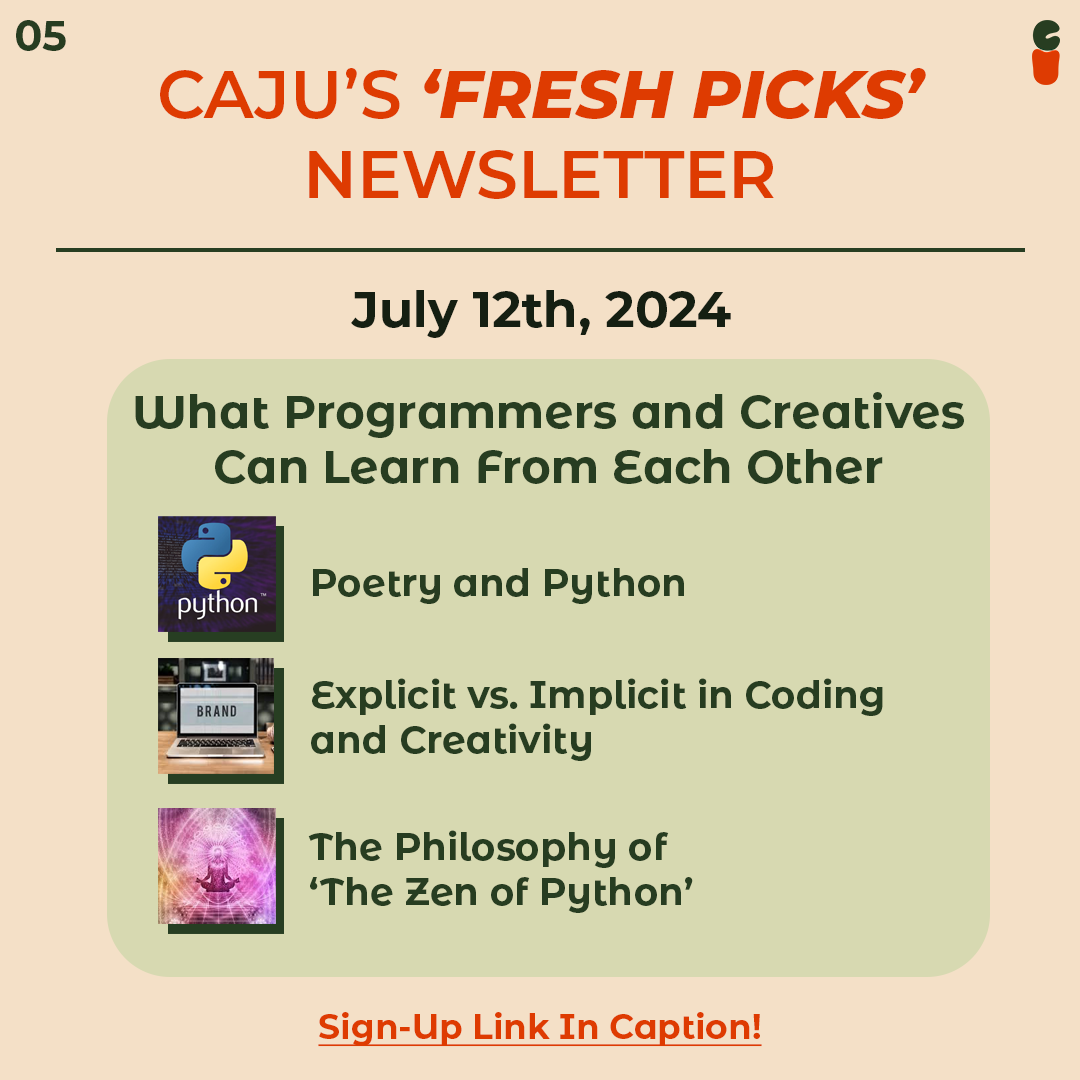
What Programmers and Creatives Can Learn From Each Other
Coding can be easily dismissed by creatives as non-creative, but one only
thinks that way if one has never really tried programming. When you find an
elegant and simple solution to a difficult logical problem in a coding
language, it is a feeling of such sublime bliss, that it rivals the feeling
one gets from a eureka moment when creating art… If you make a mistake or
if life throws you an error, smile! You just learned something. If you’re
clever, you’ll build new ways of handling that situation in the future.
That is how bugs become features.
ProductionWorkflow DesignCreative Strategy
Read ArticleJuly 5, 202421 min readCasey Franco
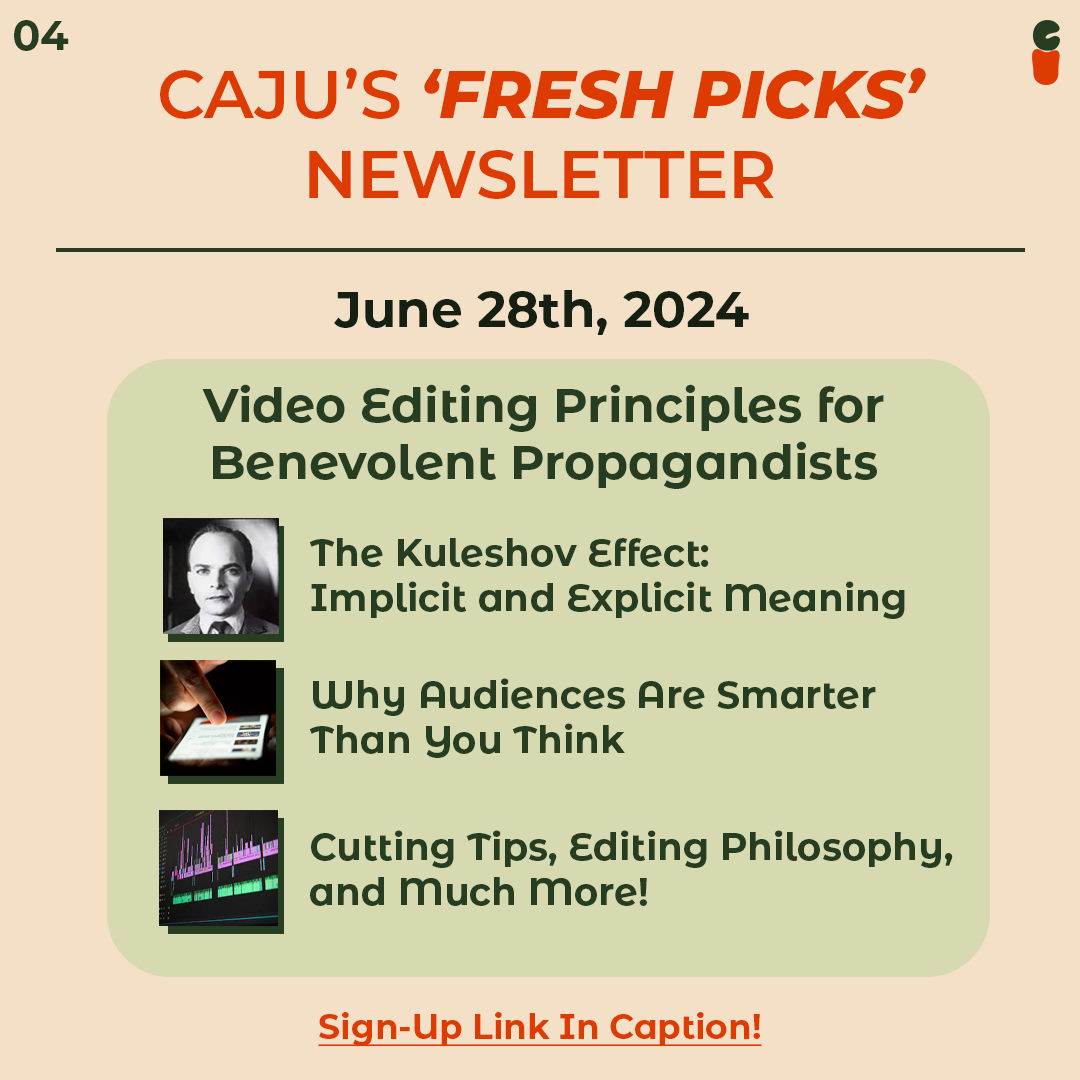
Video Editing Principles for Benevolent Propagandists
Less is often simply less, not more. Short TikTok-style videos briefly
entertain but leave something to be desired. They are consumed not
digested… The modern person is busy and strapped for cash, not stupid. They
have a shortage of attention because they have a shortage of time because
they have a shortage of money. But they will make time for that which puts
time back into their lives, puts money back into their pockets, or puts
grandiose dreams back into their imaginations.
ProductionVideo ProductionCreative Strategy
Read Article